Georgia Tech Industrial Design Projects Named Global Aviation Innovation Award Finalists

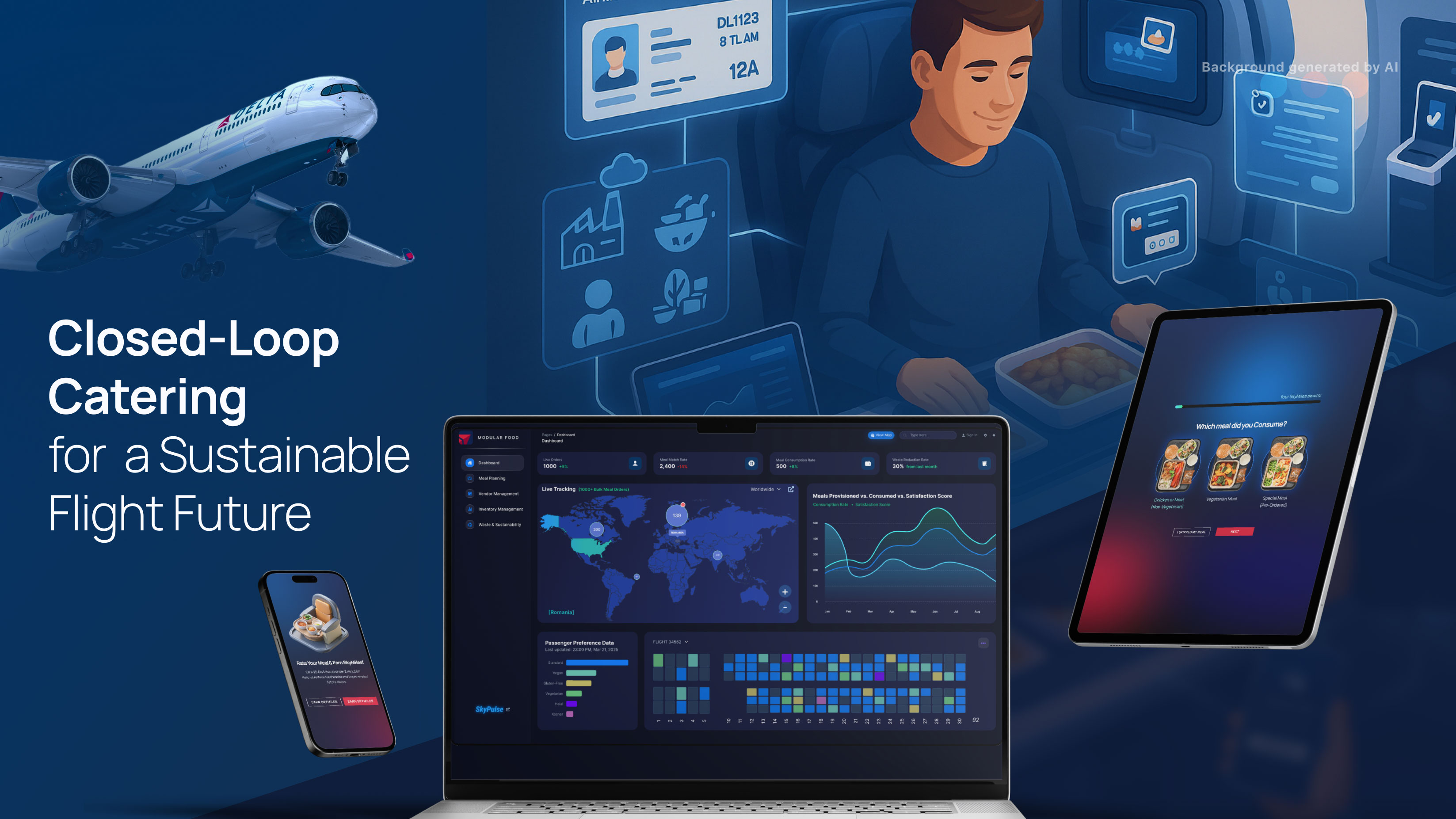
Illustration showing a digital airline catering system where passengers select meals on a tablet while a dashboard tracks food usage and sustainability metrics across flights.
Crystal Cabin Award
The Closed-Loop Cabin Catering Data System Redesign, a redesigned cabin catering data system with a closed data loop. GT Industrial Design partnered with Airbus and Delta Air Lines for this project, which was selected as a Crystal Cabin finalist.
By Melissa Alonso | March 10, 2026 - Atlanta, GA 

When you board a plane, you probably think about your seat, your snack, or whether the flight will be on time. Behind the scenes, however, an enormous amount of design and data work goes into making that experience smoother, more sustainable, and more efficient. 

That’s where Georgia Tech comes in.

This year, Georgia Tech School of Industrial Design graduate students have been named finalists — twice — for the 2026 Crystal Cabin Award, one of the most prestigious honors in the aircraft interiors industry. Selected from 85 submissions worldwide, the two Georgia Tech projects were recognized in the University category, which highlights forward-looking ideas from academic research and student teams. The awards will be presented in April in Hamburg, Germany, during the Aircraft Interiors Expo, the world’s leading event focused on airplane cabin innovation.

Smarter Meals, Less Waste

One finalist project from GT’s School of Industrial Design focuses on something every airline passenger experiences: in-flight meals. Developed in partnership with Airbus and Delta Air Lines, the Closed-Loop Cabin Catering Data System Redesign rethinks how airlines plan meals for flights. Right now, airlines must estimate how much food to load based on past trends. That often leads to waste — unused meals that must be discarded. 

The proposed solution connects passenger preferences, what people actually eat on board, and post-flight feedback into one continuous data loop. That information helps airlines better predict demand, personalize meals, and reduce food waste. In simple terms: better data means fewer wasted meals, lower costs, and a smaller environmental footprint.

Faster Cleaning, Fewer Delays

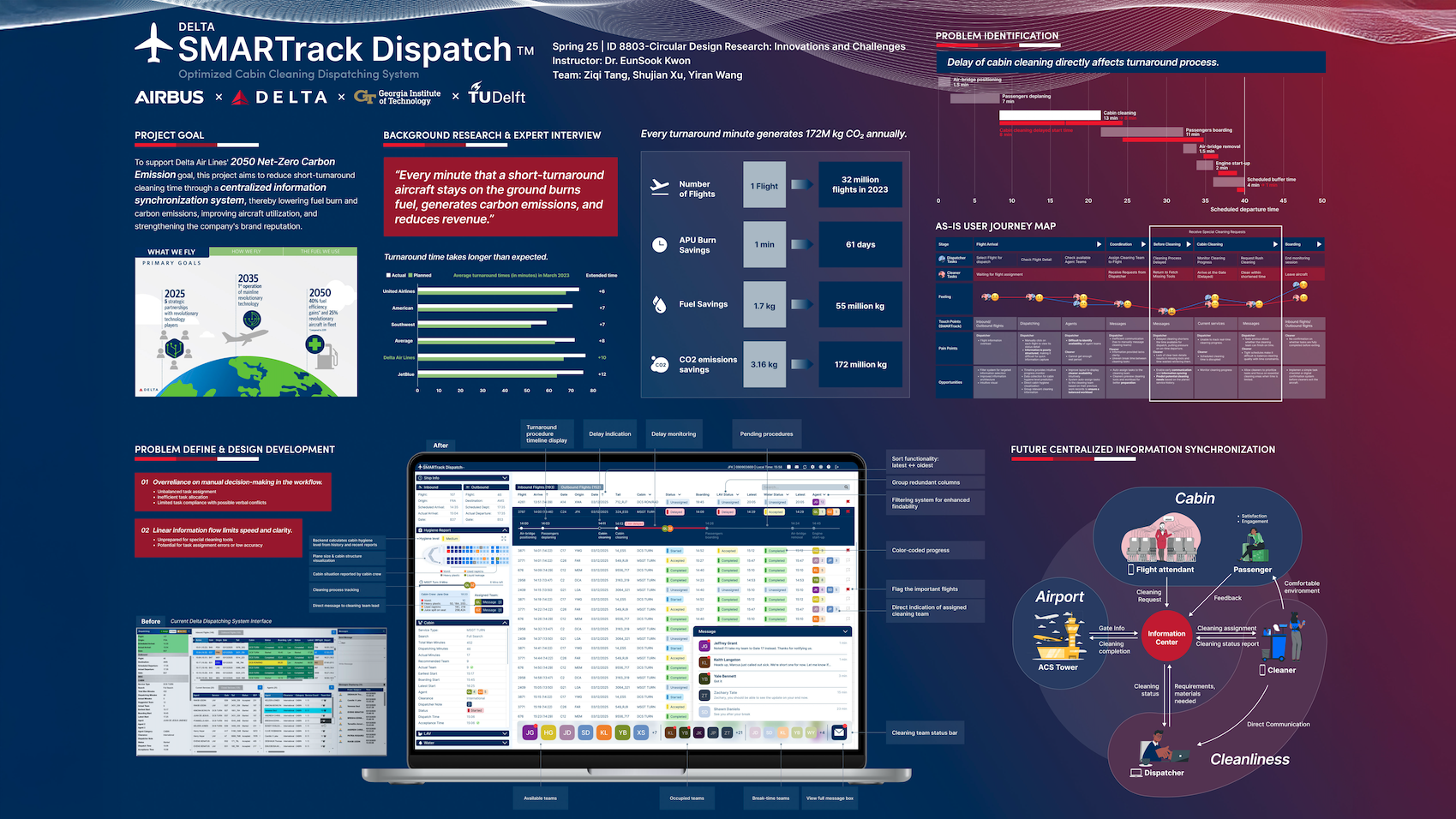
Design research poster illustrating an airline cabin cleaning dispatch system that coordinates airport operations, cleaning teams, and flight schedules to reduce turnaround delays.
Crystal Cabin Award
SMARTrack Dispatch system, a digital platform designed to coordinate aircraft cabin cleaning and airport operations to reduce turnaround delays and support more efficient, sustainable airline operations.

The second finalist project tackles another common frustration: flight delays. 

The SMARTrack | Optimized Cabin Cleaning Dispatching System, developed with Airbus and Delta Air Lines, focuses on improving the time between when a plane lands and when it’s ready for its next departure. 

Instead of relying on fragmented communication, the system centralizes information and gives cleaning crews, dispatchers, and flight teams real-time updates through filters, color coding, and shared dashboards. 

The result? Faster, more organized cabin cleaning. And when turnaround time improves, planes spend less time idling on the ground — which means less fuel burn, lower CO₂ emissions, and more on-time departures.

Why This Matters

While these projects involve data systems and airline operations, they are rooted in design thinking—improving how people, information, and processes work together. 

That’s the strength of Georgia Tech’s approach: combining industrial design, engineering, and industry partnerships to solve real-world problems. 

Being named a Crystal Cabin Award finalist places Georgia Tech alongside major global companies shaping the future of air travel and the circular economy. It also highlights how academic research can directly impact everyday experiences—from the meal on your tray table to the timeliness of your flight. 

Winners will be announced April 14 in Hamburg. Regardless of the outcome, Georgia Tech’s recognition signals something clear: the future of aviation innovation isn’t just happening in corporate labs. It’s happening in university studios and research collaborations—and it’s already taking flight.

Project Details

Projects developed in the ID graduate course: Circular Design Research 

Instructor: EunSook Kwon 

Team: 11 GT Industrial Design graduate students 

 - Finalist Projects -

Closed-Loop Cabin Catering Data System Redesign 

Students: Irene Jacob, Berkeley Chandler, Qun Liu 

SMARTrack | Optimized Cabin Cleaning Dispatching System 

Students: Shujian, Zigi Tang, Yiran 

Acknowledgements: 

Airbus Americas Inc. 

Delta Air Lines

Have a Question for Us?

 
If you can't find the information you were looking for, we'll get you to the right place.