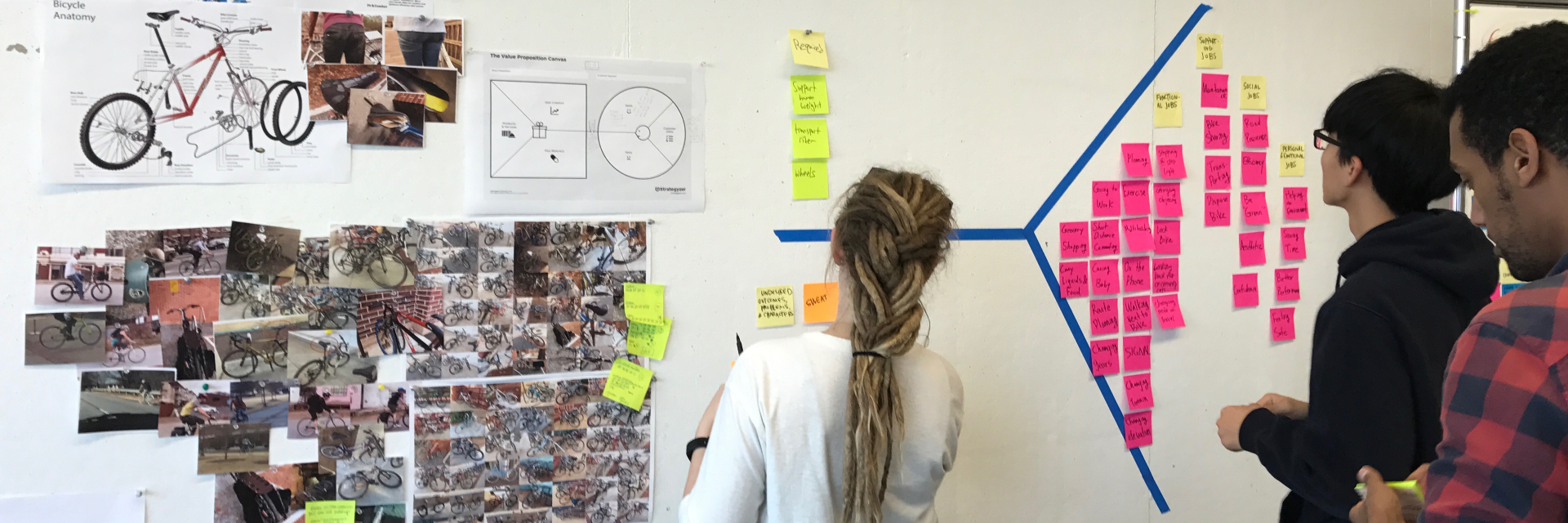
students pinning up research on a pin-up board.

PhD in Integrated Design and Computing

PhD in Integrated Design and Computing

The PhD in Integrated Design and Computing (IDC) is an interdisciplinary doctoral program at the intersection of design, computing, and human experience.


Offered jointly by Georgia Tech's School of Industrial Design and School of Interactive Computing, the program brings together design-based inquiry and advanced computational methods to investigate complex societal and technological challenges.


IDC students generate new knowledge through research, experimentation, prototyping, and critical inquiry. Working across products, services, digital experiences, simulations, and emerging technologies, they explore how design and computing can contribute to responsible and sustainable systems at the human scale.

Why IDC?

Some of today's most important questions cannot be addressed through design or computing alone. Unlike computing-forward doctoral programs that use design to support the development and evaluation of technology, IDC places design at the center of research and knowledge generation.


Students integrate the theories, methods, and practices of design and computing to investigate complex questions, create and prototype new possibilities, and understand their implications at the human scale. Research may engage computational modeling, simulation, artificial intelligence, immersive technologies, human-centered design, participatory approaches, prototyping, and other emerging methods. Across these areas, students combine imagination and rigor, making and inquiry, technological exploration and critical reflection.


The result is a distinctly design-centered approach to doctoral research: one in which designing and making become ways of investigating questions, testing ideas, and generating new knowledge. The goal is not simply to advance technology, but to ask what should be designed, why, and for whom, and to question technological change, understand its implications, and help shape where it leads.


An Interdisciplinary PhD at Georgia Tech

IDC is jointly supported by the College of Design and College of Computing. Students work within an interdisciplinary research community that draws on expertise across design, computing, human-computer interaction, artificial intelligence, simulation, immersive environments, human behavior, and related fields. Each student develops an individualized research trajectory supported by faculty mentorship, advanced coursework, interdisciplinary collaboration, and independent doctoral research. This structure allows students to develop deep expertise while engaging perspectives that extend beyond traditional disciplinary boundaries.


Two Research Tracks

Students select one of two tracks to develop focused expertise aligned with their research interests and dissertation trajectory.


Social Impact and Design Futures

  • Investigates how design can contribute to positive societal change through responsible and sustainable products, services, systems, and experiences.
  • Explores participatory, community-based, and inclusive approaches while examining how materials, processes, and emerging technologies can address complex challenges at the human scale.
  • Research may engage health and well-being, accessibility, sustainability, service design, social computing, human augmentation, immersive experiences, and emerging forms of human-technology interaction.


Computational Design

  • Explores how computational methods and technologies can expand the possibilities of design.
  • Engages computational modeling, simulation, visualization, artificial intelligence, machine learning, immersive systems, interaction, and data-informed design.
  • Connects computational capabilities with design inquiry to understand, prototype, evaluate, and envision new products, services, systems, and experiences at the human scale.

A Different Kind of Doctoral Education

IDC combines the intellectual rigor of doctoral research with the exploratory and generative nature of design. Students do not only study existing systems. They design, build, test, and critically evaluate new possibilities.


Through coursework and research, students engage in design-based inquiry, computational experimentation, interdisciplinary collaboration, scholarly writing, prototyping, and engagement with industry and community partners. 


This integration of thinking and making distinguishes the IDC approach to doctoral education.


Program Structure

The PhD in Integrated Design and Computing requires 34 credit hours plus doctoral research and dissertation work. The curriculum follows an approximately four-year progression from foundational coursework and research development to independent dissertation research.


Students complete:

  • 12 credits of core coursework in Integrated Design and Computing theory, research methods, and design and computation
  • 12 credits of track-specific electives
  • 4 credits of Integrated Design and Computing Seminar
  • 6 credits in a secondary field of study
  • A written and oral comprehensive examination
  • Independent doctoral research
  • Dissertation proposal and defense
  • Final dissertation and defense


Throughout the program, students participate in the IDC research community through seminars, collaboration, scholarly exchange, and engagement with faculty and external partners.

Building an Integrated Research Foundation

  • Students establish foundations in design and computing theory, research methods, and computational design while beginning to define their individual research direction.
  • Working with faculty advisors, students select a research track, develop a program of study, explore a secondary field of scholarship, and begin doctoral research.
  • By the end of the second year, students complete their comprehensive examination and transition toward independent dissertation research.

Advancing New Knowledge

  • Students increasingly focus on independent research.
  • During the third year, candidates develop and defend their dissertation proposal.
  • The fourth year centers on completing the research, preparing the dissertation, and defending their contribution to knowledge.

Who Is the IDC PhD For?

The IDC PhD welcomes applicants interested in conducting research at the intersection of design and computing. Students may enter with backgrounds in design, computing, engineering, human-computer interaction, the social sciences, or related disciplines. What connects them is an interest in using interdisciplinary research to investigate complex questions involving people, technology, and society. The program may be particularly suited to applicants interested in design-based inquiry, computational design, human-centered technology, emerging technologies, responsible innovation, and the future of products, services, systems, and experiences.


Where Can the IDC PhD Take You?

IDC prepares graduates for research and leadership careers in academia, industry, and research organizations. Graduates may pursue faculty and research positions in areas such as industrial design, interaction design, integrated design, human-computer interaction, and computational design.


In industry and other research settings, graduates are prepared for advanced roles in:

  • Design and UX research
  • Research and innovation
  • Emerging technologies
  • Human-centered AI
  • Product and service strategy
  • Computational and immersive systems
  • Experience design
  • Technology and innovation leadership


Across these paths, IDC graduates bring a distinctive capability: the ability to connect design inquiry, computational methods, and human understanding to generate knowledge and lead innovation.


PhD Academic Support

Headshot of Dr. HyunJoo Oh

Dr. HyunJoo Oh

PhD in Integrated Design & Computing Program Director, Associate Professor, School of ID & School of Interactive Computing
Headshot of Dr. Leandro Tonetto

Dr. Leandro Tonetto

Interim Chair & Associate Professor, School of Industrial Design
Tamika Blanks Headshot

Tamika Blanks

Graduate Academic Advisor

Have a Question for Us?

 
If you can't find the information you were looking for, we'll get you to the right place.